Path of Exile
A thousand-node skill web, a free campaign, and an endgame that never runs out.
If you enjoy systems for their own sake, nothing on the chart goes deeper. If you don't, you will bounce off it in an hour, and that is fine.
Path of Exile is Grinding Gear Games' free isometric action role-playing game: click on monsters, collect what they drop, and build a character out of a passive skill web with well over a thousand nodes. It has run since 2013 on a cycle of seasonal leagues that reset the economy and add a new mechanic. Its sequel exists separately and is still in early access; this entry is about the original, which remains free and supported.
The four bearings
- N4.5Newcomer · 20%
A long campaign with almost no explanation of what makes a character work. Most new players follow a build guide from the first hour, and the studio expects that.
- E8Every session · 35%
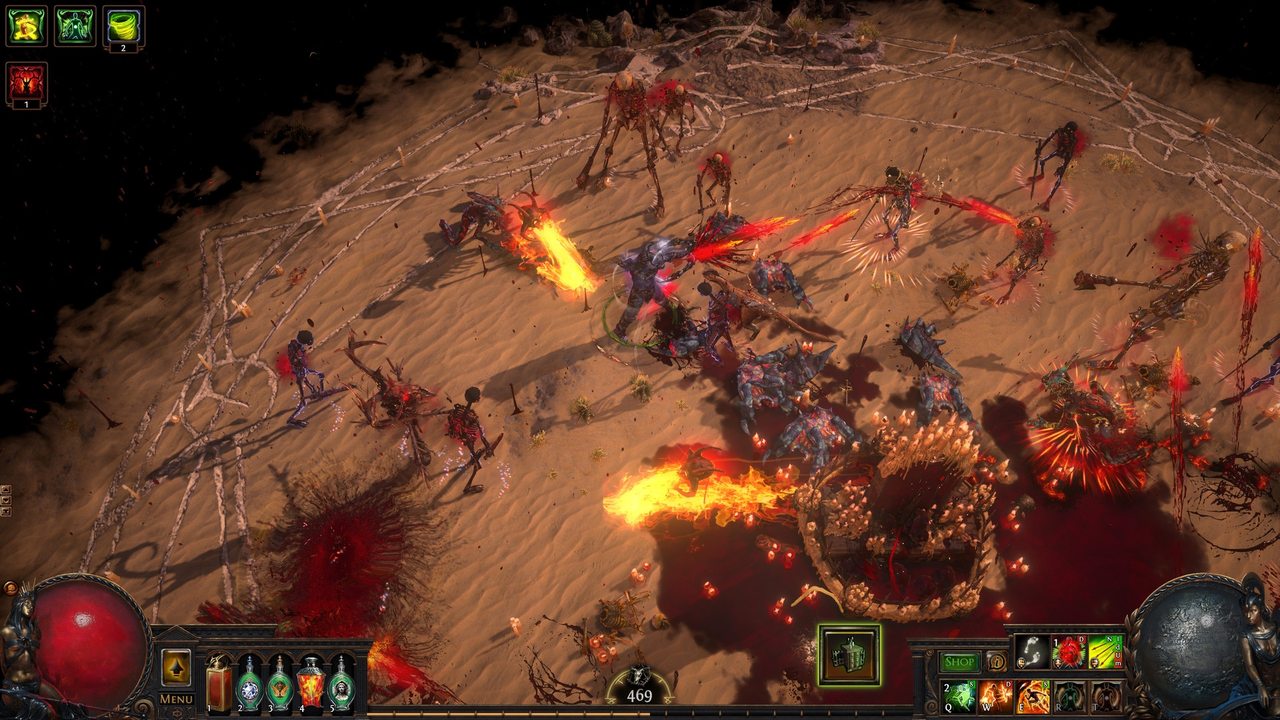
Once a build comes together the moment-to-moment is exhilarating: screens of monsters, a fountain of loot, and a map system that keeps changing. Before that, it is a slog.
- S9Staying power · 25%
Leagues every few months reset the economy and add a new system. Thirteen years of them have produced an endgame with more content than most games have in total.
- W8Wallet · 20%
No power is sold. Stash tabs are the one purchase most players make, at a modest price, and cosmetics fund the rest. Supporter packs are expensive but optional.
Weighted 20 / 35 / 25 / 20 into an Atlas score of 7.6. How the bearings work.
What you are actually doing
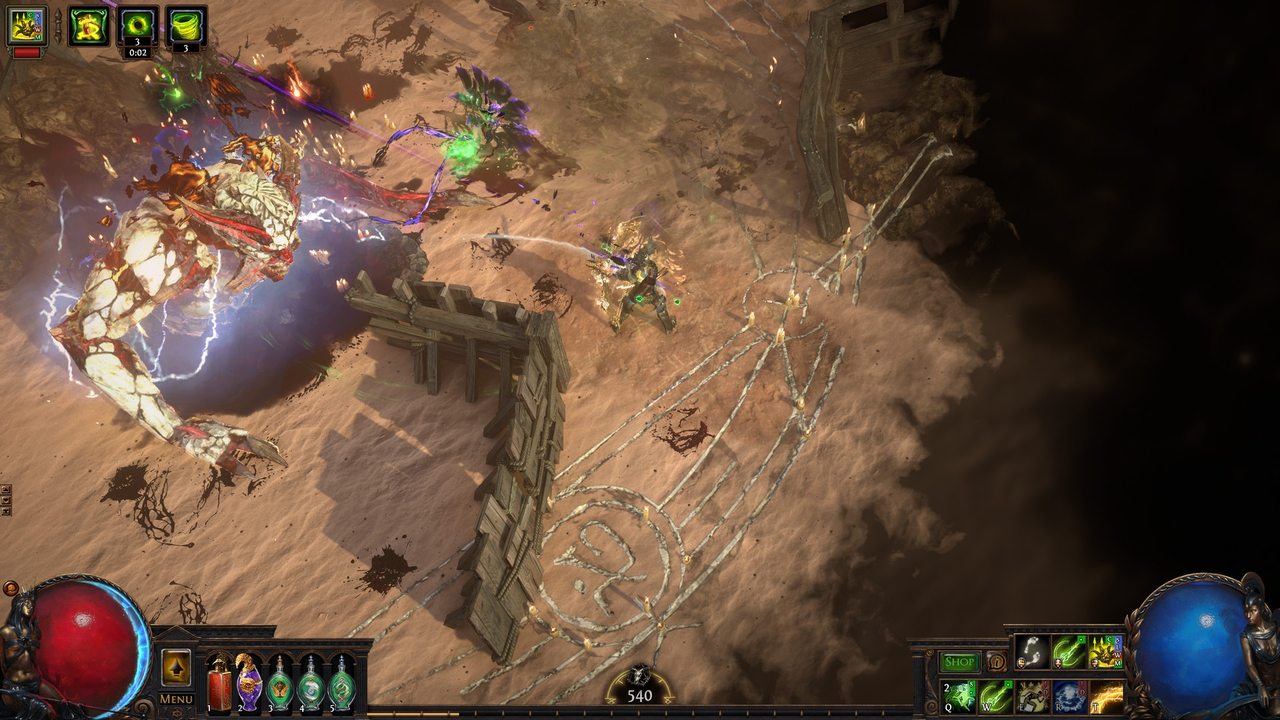
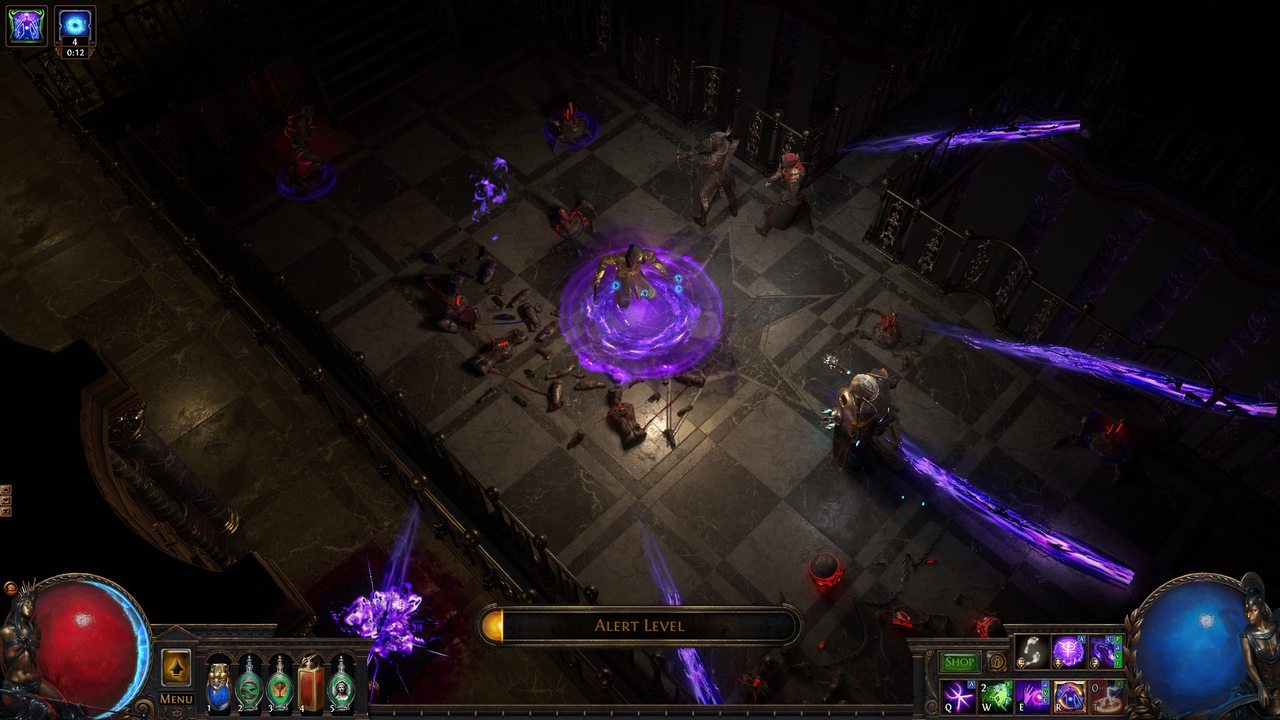
You wash up on the shore of Wraeclast as one of seven classes and fight through a ten-act campaign, then into an endgame of maps: randomised areas you open with items and modify with currency. Everything you kill drops something, and the something is the point. Skills are gems socketed into gear, so any class can use any skill; the passive web decides what your character is good at. Currency is a set of orbs with crafting uses, which double as money in trades between players.
The economy is the quiet masterpiece. Because currency has a use, it has a value, and because leagues reset every few months, everyone starts poor together. Trading is done through an official site and in-game whispers; there is no auction house on purpose.
The first evening, honestly
The first hour is a pleasant, ordinary action game. The trouble arrives when you realise you have spent thirty points on the passive web with no plan and your character has stopped killing things. Path of Exile does not explain this; the community does, through build guides that tell you exactly which nodes to take. Following one is not cheating. It is how everyone learns, and the studio's own onboarding assumes it.
Why it stays
A new league every few months brings a new mechanic, a fresh economy and a reason to build a new character. The current one, 3.29 Curse of the Allflame, launched on 24 July 2026 with an underwater Voyage mechanic, hireable mercenaries and a new ascendancy, and Steam counted 187,000 players at once on its opening weekend. Most of the old mechanics stay in the endgame, so the map system has become a layered archive of everything the game has ever tried. It is the reason the sequel's arrival has not emptied the original: they are different games with different players, and Path of Exile 2 leaves early access as a free game on 11 December 2026.
Where it shines, where it drags
- Unmatched build depth
- Seasonal leagues keep the economy and the game fresh
- No power sold; the essential purchase costs a few pounds
- A campaign of respectable size, completely free
- Explains almost nothing; build guides are effectively required
- The campaign drags on repeat characters
- Visual clutter at the endgame can be overwhelming
- No cross-play between platforms
The toll: what it costs in the UK
Path of Exile is free to install and free to play in full. The shop sells stash tabs, which add storage for items, cosmetic effects and supporter packs that fund development. Nothing sold gives an advantage in combat. Most regular players buy a few stash tabs during a sale and nothing else.
- To install and playFree
- PointsPriced in US dollars on the official site (50 points for $5); £ shown in Steam and console stores
- Currency stash tab75 points, about £6; the one purchase we would recommend
- Premium stash tab40 points each, often bundled on sale
- Kirac's Vault Pass premium track300 points; a free track exists
- Supporter packs£23.93 and £47.86 on Steam UK for the current cycle; larger tiers on the official site
Randomised items: Yes, for cosmetics. Mystery boxes are sold for points and give a random cosmetic from a listed pool with protection against duplicates, but Grinding Gear Games does not publish per-item odds. Nothing inside affects play. We would skip them; most of the same cosmetics are sold directly at fixed prices.
Subscriptions and online play: No subscription. Online play is free on PC; PlayStation and Xbox do not require their paid online service for a free-to-play title.
Prices checked 24 September 2026 on the UK stores named above. See Paying for games in the UK for the rights that apply to each payment route.
Who it suits
Players who enjoy reading, planning and tuning, and who like the loot to be the reward. If you want the co-op action without the spreadsheet, Warframe is the other Frontier road.
Where to go next
Start with the Path of Exile waypoint for a first evening that goes well. Or compare it directly: Warframe or Path of Exile.